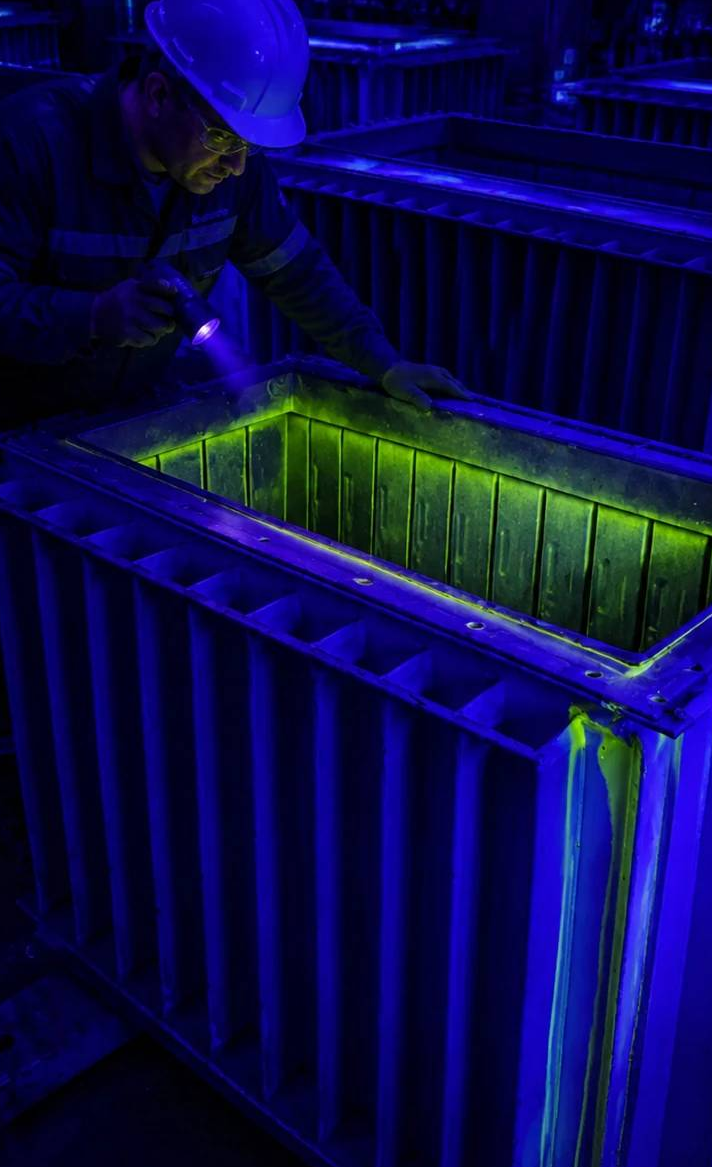


The Role of Fluorescent Compounds in Industrial Defect Detection
The performance of a high-quality fluorescent leak detector depends directly on the chemical know-how behind its formulation. In this article, we take a closer look at why certain compounds exhibit fluorescence and how this property is harnessed for precise weld defect detection.
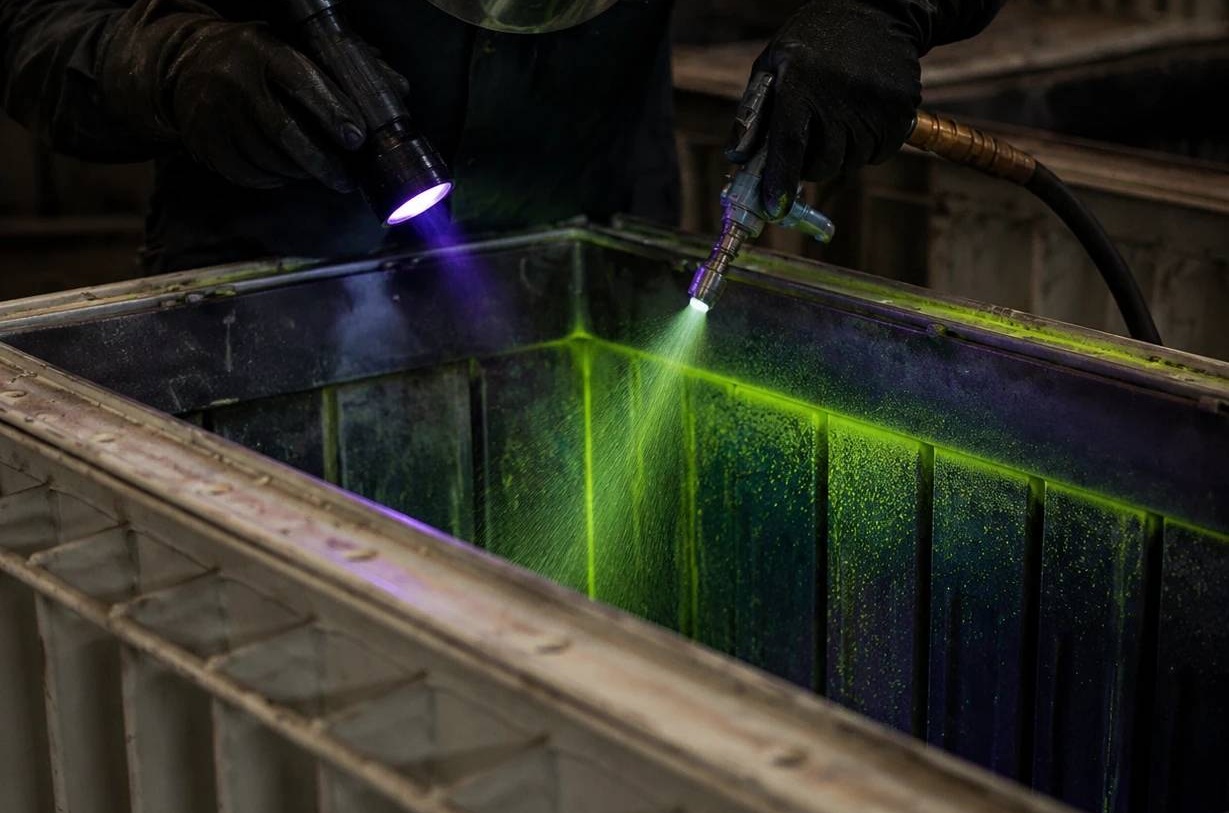
What Is Fluorescence?Fluorescence is a phenomenon in which a material absorbs light at one wavelength, typically ultraviolet (invisible to the human eye), and immediately re-emits it at a different wavelength within the visible range. This occurs at the molecular level: electrons in the fluorescent material absorb the energy of UV light and jump to higher energy levels, then release part of that energy as visible light as they return to their ground state.It’s important to note that not all compounds possess this property; only molecules with a specific chemical structure exhibit effective fluorescence. Selecting and stabilizing these compounds within a suitable carrier is a key part of formulating a high-quality leak detector.Why Does Chemical Formulation Matter?A fluorescent leak detector is not simply “a colored liquid under UV light.” The real quality of the product lies in several key parameters:Stability of the fluorescent compound in the oil carrier: If the compound is not properly stabilized, it can settle out over time or lose its glow intensity.Controlled surface tension: Capillary penetration into fine weld cracks depends on precisely tuning the liquid’s physicochemical properties.Minimal residue after cleanup: An unbalanced formulation leaves sticky or visible residue on the surface after testing, an issue that’s unacceptable in industries such as transformer tank manufacturing.ConclusionFluorescent compounds are the scientific backbone of non-destructive leak testing in welding industries. The quality of these compounds, and how they’re formulated, is what separates an average product from a precise, reliable inspection tool.